Source control and safety checks
Stopping the leak or overflow comes first. We help you prioritize shutoffs and safe access, then separate affected areas to limit spread and protect contents.
Serving Los Angeles CA & surrounding areas
24/7 Emergency Response
Fast response for leaks and floods, with a clear restoration plan. Protect the structure, finishes, and indoor air with measured drying, thorough cleanup, and practical guidance for the repairs ahead.
Act on what the water reached
If you are dealing with water damage Los Angeles homes and buildings can face everything from a pinhole supply-line leak to a sudden overflow or storm-related intrusion. The first hours determine how far water travels, what materials can be saved, and how likely you are to end up with swelling, delamination, staining, odors, or mold growth.
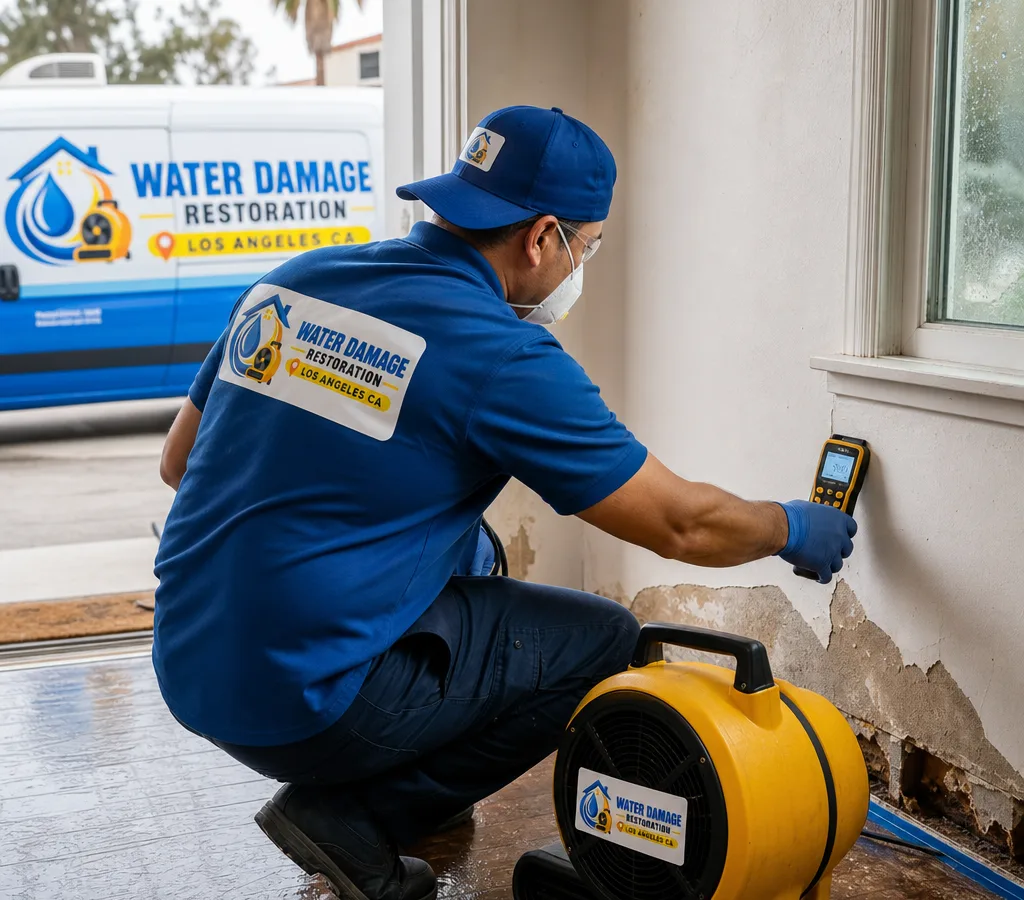
Our work starts with containment and a measured drying plan. We identify the water source, map moisture beyond what you can see, and set drying equipment using real readings instead of guesswork. Photos, moisture logs, and a written scope help keep decisions clear when coordinating with a property manager, tenant, or insurance adjuster.
Los Angeles buildings vary by age and construction style, which changes how water behaves. Older plaster can retain moisture differently than modern drywall. Slab-on-grade foundations may hide moisture migration along the perimeter, while multi-unit buildings introduce shared walls, chases, and units below. The right approach matches the structure and the category of water involved.
A complete response plan
Stopping the leak or overflow comes first. We help you prioritize shutoffs and safe access, then separate affected areas to limit spread and protect contents.
We find wet materials behind baseboards, under flooring, and inside wall cavities, then write a practical plan for drying and restoration.
Air movers, dehumidifiers, and controlled cavity drying when needed are set based on material type and readings, not just square footage.
Water category drives cleaning. When contamination is a risk, appropriate disinfection and disposal help make the space safe to re-occupy.
When demolition is required, we remove only what cannot be dried or cleaned while protecting salvageable trim, cabinets, and finishes.
Photos and drying logs support decision-making and help keep communication clear if an insurer or property manager needs a consistent record.
Leaks, overflows, and floodwater
Water problems rarely look dramatic at first. In Los Angeles, many urgent calls start as a small issue that runs for hours or days: a slow leak under a sink, a failed angle stop, a fridge line, a toilet supply, a tub overflow, or a water heater release. In multi-family buildings, a unit above can impact ceilings and walls below before anyone sees it.
We also respond to floodwater intrusion and heavy rain events that push water through doors, garages, or low points. These jobs often require faster extraction, earlier containment, and more aggressive drying because water can carry debris and contaminants.
No matter the cause, the goal is the same: dry the structure to a stable condition, remove materials that cannot be saved, and leave the property clean and ready for repairs. Our team explains what to expect from first contact through completion.
From inspection to repair planning
We inspect the affected area, check adjacent rooms, and map moisture in walls, floors, and ceilings. You get a clear explanation of what is wet, what is likely impacted, and what can be saved.
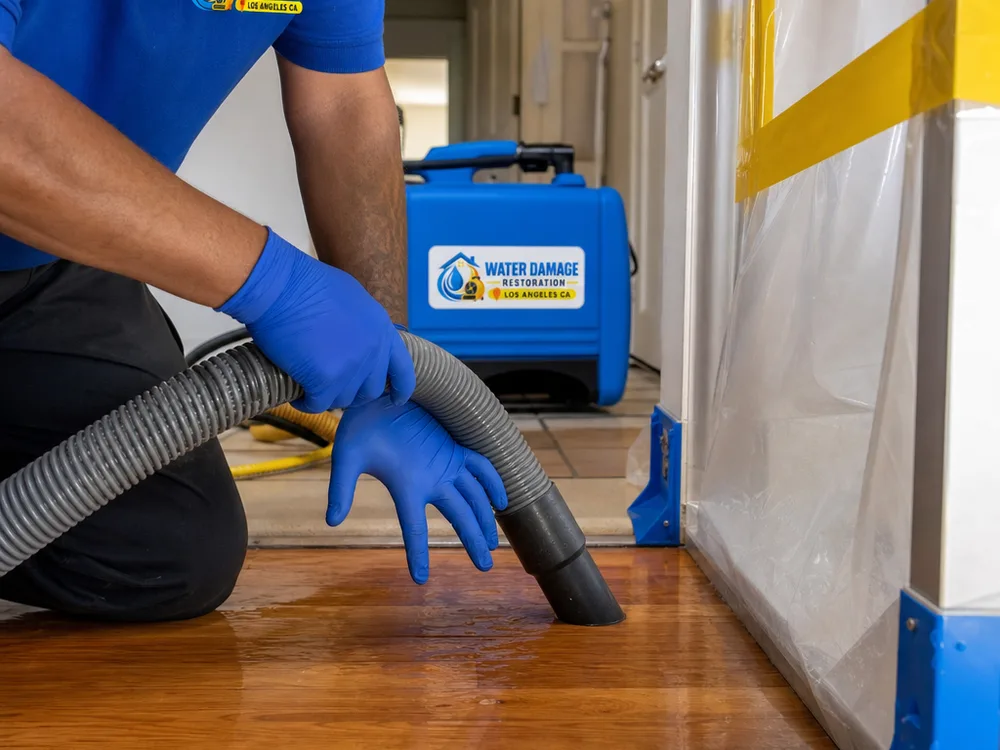
If there is standing water, we extract it first. We then protect nearby contents and finishes by moving items, placing barriers, and isolating wet zones.
We set air movement and dehumidification to match the materials and conditions, then adjust equipment as readings change to avoid leaving hidden moisture behind trim, under flooring, or inside cavities.
Clean-water losses may need basic cleaning and antimicrobial application. If water is contaminated, we apply stricter cleaning, disposal, and safety controls before the property is cleared for use.
We track progress with moisture readings and photos, then outline what comes next, whether that is a targeted rebuild, paint, flooring replacement, or a larger repair plan.
Understanding the scope
Water damage restoration in Los Angeles typically ranges from about $1,200 to $6,500 for many residential losses, while larger projects with extensive demolition, contaminated water, or multiple rooms can reach $10,000+.
Your final price depends on how long materials stayed wet, how many rooms and levels are affected, the type of flooring and wall systems, access for equipment, and whether sanitizing and disposal are required. The most accurate number comes after an on-site inspection and moisture mapping that confirms the full scope.
“We had a leak that soaked the wall and the flooring but didn't look bad at first. The crew found moisture beyond what we could see and set up drying the same day. The updates and photos made it easy to keep everything straight.”
Maya R.
“The job was handled professionally from inspection through cleanup. They explained what needed to be removed and what could be saved, and they kept the work area contained so the rest of the house stayed usable.”
Daniel S.
Answers for the next decision
Start the same day whenever possible, because moisture spreads through drywall, insulation, flooring, and framing even when the surface looks dry. Early extraction and dehumidification reduces swelling, staining, and the chance of microbial growth, and it often lowers the amount of material that has to be removed.
Clean water comes from a sanitary source like a supply line, while contaminated water can include sewage backups, groundwater intrusion, or water that has sat long enough to pick up bacteria and debris. The category determines how aggressive cleaning, disposal, and protective measures need to be before the area is considered safe.
Sometimes, yes, if the materials are in good condition and the water type allows it. We confirm this with moisture readings and inspection, then choose a drying approach that may include controlled cavity drying and targeted removal rather than full demolition.
Drying commonly takes several days, but the timeline depends on the material stack, how wet the structure is, and airflow conditions. Repairs can add additional time, especially if specialty materials, matching flooring, or tenant coordination are involved.
No, you can choose to pay out of pocket, especially for smaller losses. If you involve insurance, thorough documentation and a clear, itemized scope help the claim process; photos and moisture logs show what was affected and what work was performed.
If it is safe, stop the water at the nearest shutoff, move small valuables out of the wet area, and avoid running HVAC if you suspect water reached ducts or returns. Do not disturb suspected contaminated water without protection, and avoid using household fans in a way that blows moisture into wall cavities.
Tell us what happened and where the water is showing up. We will walk you through immediate next steps, inspect for hidden moisture, and provide a written plan for drying, cleanup, and the repairs that follow.