Rapid water extraction and stabilization
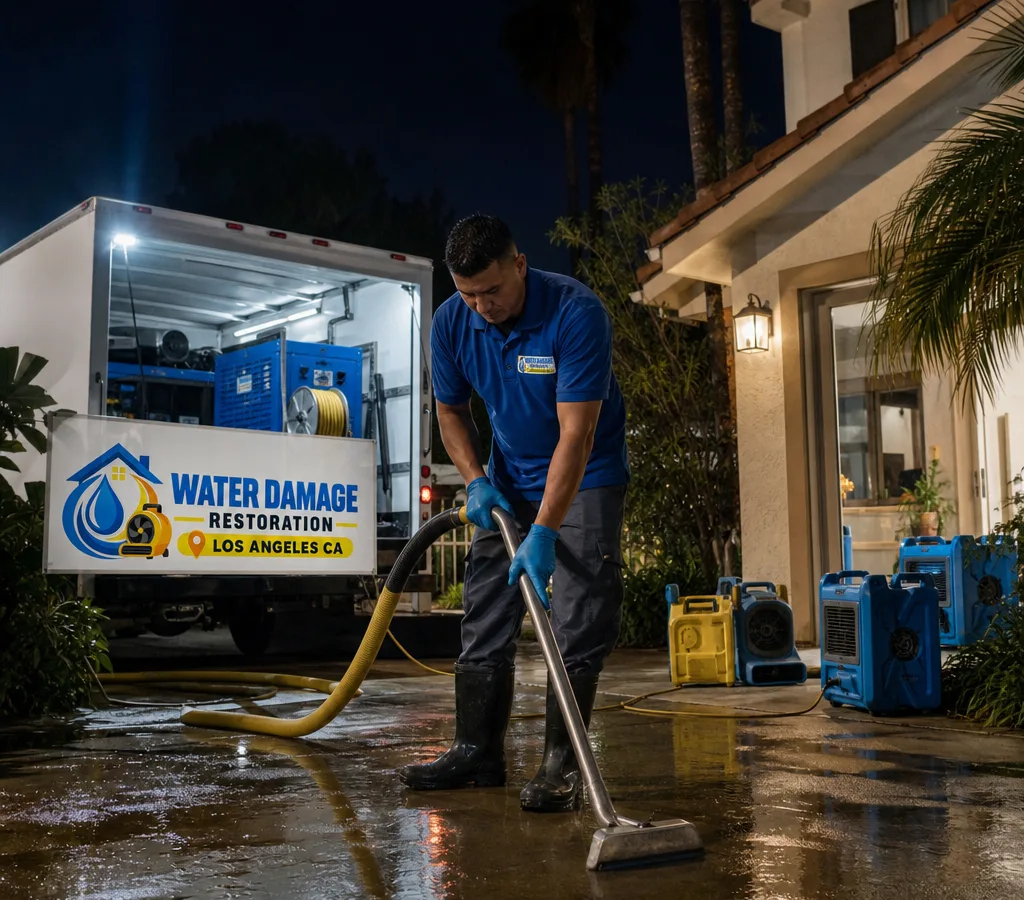
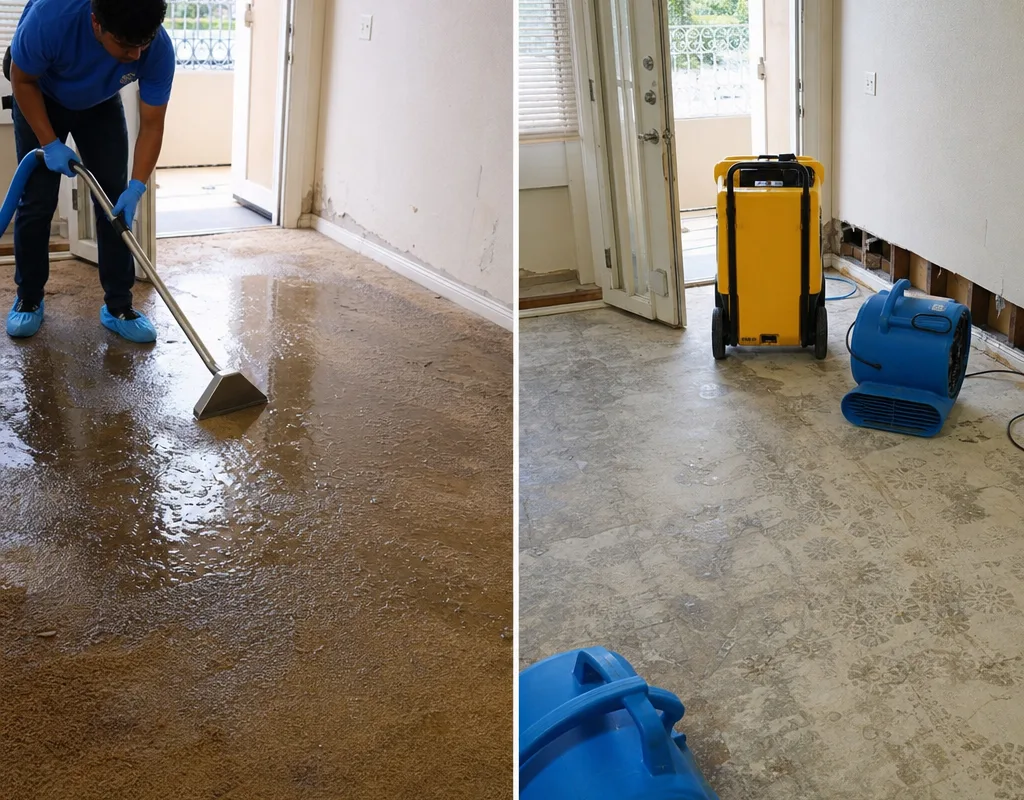
We prioritize stopping the spread. That means removing standing water, protecting unaffected rooms, and setting drying equipment based on the materials that are wet.
Serving Los Angeles CA & surrounding areas
24/7 Emergency Response
Water damage does not wait for business hours. Our team responds day or night to stop the loss, dry the structure, and document the work so you can move forward with confidence.
Act before moisture spreads
If you searched for 24 7 water damage restoration los angeles, you are probably dealing with active water, wet drywall, soaked flooring, or that musty smell that shows up fast after a leak. The goal in the first hours is simple: stop the source when possible, remove standing water, and start controlled drying before moisture spreads into framing, subfloors, and insulation.
In Los Angeles, we see water damage from supply line failures, overflowing tubs, HVAC condensate issues, and roof or window leaks after rain. Condos and multi-unit buildings add another problem: water can travel to units below, and access or approvals can slow things down. A true 24/7 response means arriving ready to extract, set containment, and begin drying right away, then building a clear plan for the next steps.
Water Damage Restoration Los Angeles CA focuses on emergency response and the complete restoration workflow: mitigation, drying, monitoring, and documentation that helps you make informed repair decisions.
Complete mitigation support
We prioritize stopping the spread. That means removing standing water, protecting unaffected rooms, and setting drying equipment based on the materials that are wet.
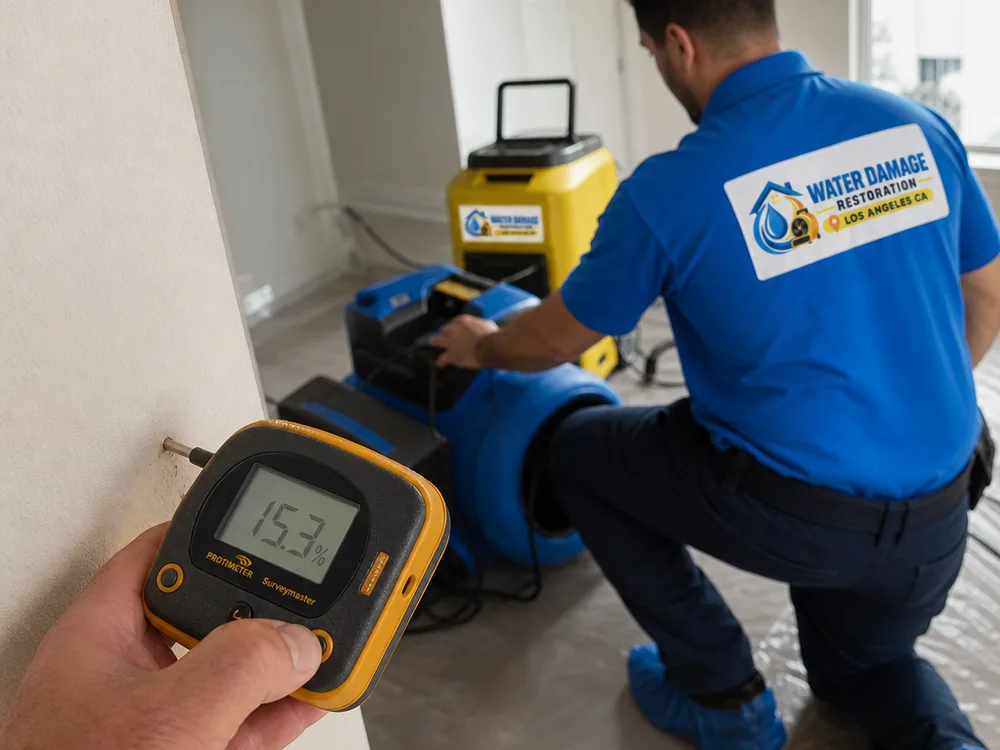
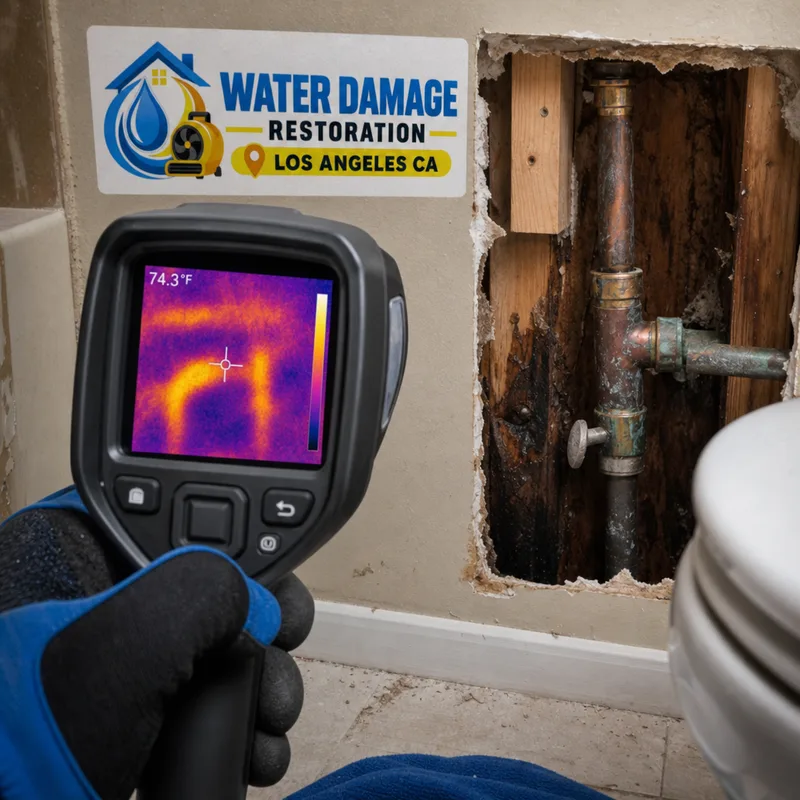
We track affected areas with moisture readings so drying is targeted. This helps prevent hidden damp spots behind baseboards, under flooring, and inside wall cavities.
Air movers and dehumidifiers are sized to the job, then adjusted as conditions change. Drying is monitored so materials are not left wet or overdried.
You receive a written scope of what was affected, what was done, and what still needs attention. This is useful for property managers, landlords, and insurance conversations.
We set equipment and containment to keep pathways open when possible, manage cord runs safely, and explain noise, humidity, and access needs up front.
From older plaster walls to newer drywall and engineered flooring, we tailor the approach to how Los Angeles properties are built and how water moves through them.
A plan shaped by the property
Water damage restoration in LA is not one-size-fits-all. A mid-century home in the San Fernando Valley can hide moisture in wall cavities and attic insulation after a supply line break, while a Downtown high-rise often requires coordination for access, elevator rules, and after-hours work approvals. In Hollywood and Koreatown, many buildings have shared walls and multiple units, so water migration and liability concerns make documentation and moisture mapping especially important.
Coastal areas like Santa Monica can add higher ambient humidity, which can slow drying if dehumidification is not set up correctly. When rain hits, roof and window leaks can show up across multiple rooms at once, and the focus becomes containment and prioritizing what must be opened to dry.
No matter the neighborhood, the first visit should end with a clear answer to three questions: Where did the water go, what is wet now, and what is the fastest safe path to dry it? That is the core of 24/7 water damage restoration Los Angeles homeowners and property managers can rely on when time matters.
From emergency response to verification
We gather the key facts—when it started, clean versus contaminated water, and where it spread—and help you prioritize source shutoff. If the source is still active, stopping it is step one.
Standing water is removed, then we protect adjacent areas with plastic containment, floor protection, and strategic equipment placement to keep traffic paths usable.
We identify wet materials and likely migration paths under flooring, behind baseboards, inside cabinets, and around penetrations. You get a written scope of what is affected.
Air movers and dehumidifiers are set based on room size, materials, and humidity. When needed, we open small access points for cavity drying rather than drying blindly from the outside.
Drying is not set-and-forget. We check readings and adjust equipment locations, humidity targets, and containment so drying stays efficient and safe for the structure.
Once materials reach a dry standard appropriate for the situation, we document the results and outline any rebuild needs like drywall replacement, baseboard reset, or flooring decisions.
Understanding the scope
Most 24/7 water damage restoration jobs in Los Angeles typically range from about $1,200 to $6,500, depending on how far the water traveled and how much drying is required. A small, clean-water leak contained to one room may land near the low end, while multi-room drying with removal of wet drywall or flooring can reach $7,500 to $15,000+.
Final price depends on category of water—clean, gray, or black—the affected materials such as drywall, insulation, hardwood, tile, or cabinets, equipment days, access constraints in multi-unit buildings, and whether demolition is needed to dry cavities. Exact cost is confirmed after on-site moisture mapping and a written scope.
Serving Los Angeles properties
From valley homes and coastal properties to Downtown high-rises, our mitigation plan accounts for the building, access requirements, affected materials, and the way moisture has traveled.
Request Emergency ServiceInside the mitigation process
“A supply line let go late at night and water was running into the hallway. They arrived quickly, got extraction going, and explained what had to be opened up to dry the wall cavities. The daily updates made it easy to coordinate with my building.”
Maya R.
“We had a slow leak under the kitchen sink that soaked the cabinet base and the flooring. Their moisture readings showed the wet area was bigger than we thought, and the drying setup brought humidity down fast. The documentation was exactly what our adjuster asked for.”
Chris L.
Answers for urgent situations
Response time depends on where you are in Los Angeles and current demand, but true 24/7 service means dispatching at night, on weekends, and on holidays, not waiting until morning. The fastest way to limit damage is to start extraction and drying as soon as it is safe to access the affected areas.
Shut off the water at the closest valve if the leak is from plumbing, and switch off electricity to affected areas if outlets or panels are at risk. Move small valuables and electronics out of wet zones, avoid walking on sagging ceilings or wet carpet near electrical cords, and take a few photos for documentation before any major cleanup.
Yes, but the approach changes with water category. Clean-water losses can often be dried with minimal removal, while gray or black water typically requires removal of porous materials and more extensive cleaning and containment to address contamination risks.
Sometimes, yes. If moisture readings show water in insulation or inside wall cavities, selective openings can speed drying and reduce the chance of trapped moisture. When walls stay closed despite internal saturation, drying can stall and odors or microbial growth can follow.
Many residential dry-outs take about 3 to 5 days, but timelines vary based on how long the materials were wet, the type of flooring and wall assembly, and indoor humidity. Coastal humidity, multiple wet rooms, or water under tile and cabinets can extend the timeline.
Yes. Multi-unit losses often need coordination for access, quiet hours, elevator use, and documentation for adjacent units. We provide a clear scope and moisture mapping results so managers can track impacted areas and make decisions quickly.
Basic airflow can help in the first hours, but household fans alone rarely control humidity well enough to dry building materials, and they can spread moisture if placed incorrectly. Professional drying uses dehumidification and measured airflow, guided by moisture readings, to dry materials without guessing.
Yes. We document affected materials, moisture readings, equipment placement, and the drying progress so you have a clear record of what happened and what was required. Insurance requirements vary by policy, but thorough documentation is consistently helpful.
Tell us what happened, where the water is, and whether the source is stopped. We will prioritize rapid stabilization, a clear written scope, and a drying plan that fits your Los Angeles property.