
Clear, documented findings
You get a written scope of observed conditions, moisture readings, and where further investigation is warranted, so decisions are based on evidence.
Serving Los Angeles CA & surrounding areas
24/7 Emergency Response
Get clear findings before you clean, open walls, or plan repairs. If you smell musty odors, see staining, or have had a leak, a professional inspection can confirm whether mold is present, what's driving it, and what to do next. Our certified inspectors provide clear findings, moisture mapping, and lab-ready sampling when needed.
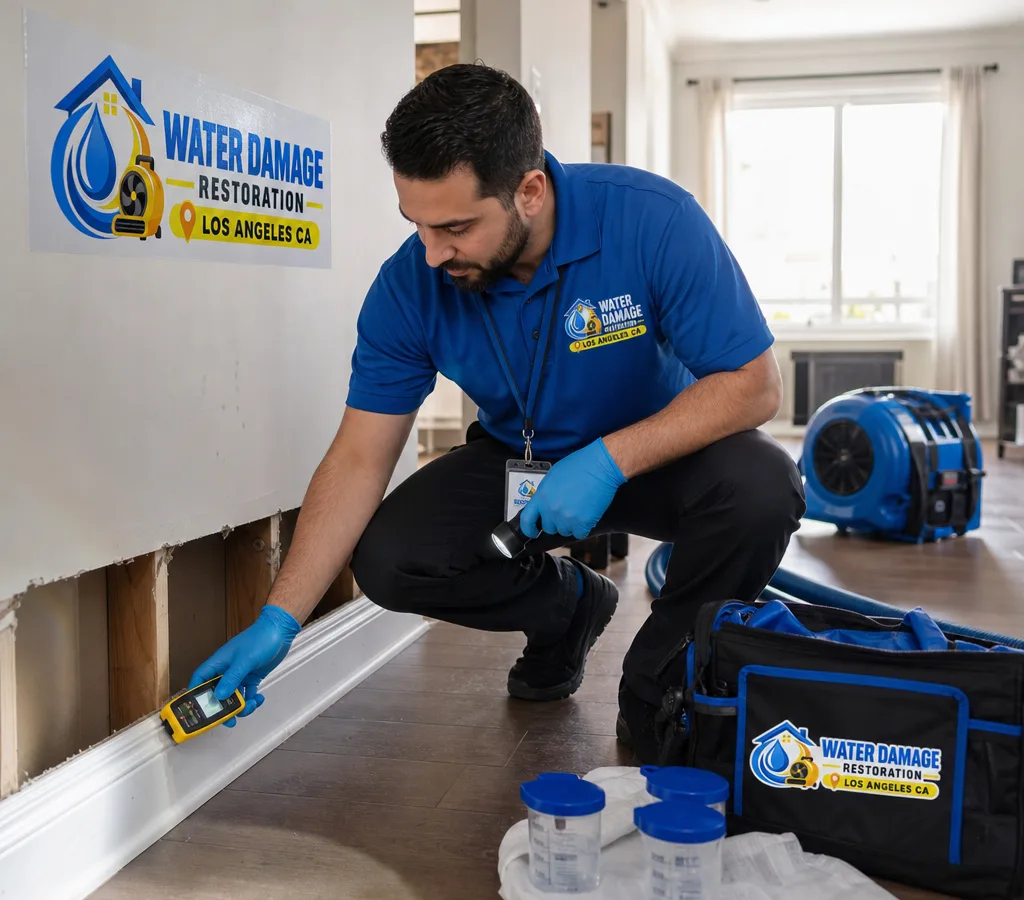
Recognize the warning signs
A mold problem is usually a moisture problem first. In Los Angeles, that often shows up after a plumbing leak, an HVAC condensate overflow, water intrusion around windows, or slow humidity build-up in bathrooms and laundry areas.
Schedule an inspection when you notice:
Mold can grow inside wall cavities, under flooring, above ceilings, and behind cabinetry. Inspection helps confirm whether mold is likely present, identify the moisture source, and document which areas need attention. If active water damage is also present, our team can help coordinate the next steps after inspection without guessing.
Evidence before assumptions
A thorough mold inspection should be more than a quick look with a flashlight. We combine visual assessment with moisture diagnostics to understand where water is getting in or lingering.
Typical inspection elements include:
If sampling is collected, it is packaged for laboratory analysis and interpreted in plain language. Your written report connects findings with likely moisture sources, records visible conditions, and outlines practical next steps. We also flag widespread growth, attic contamination, or suspect materials that should not be disturbed before a plan is established.
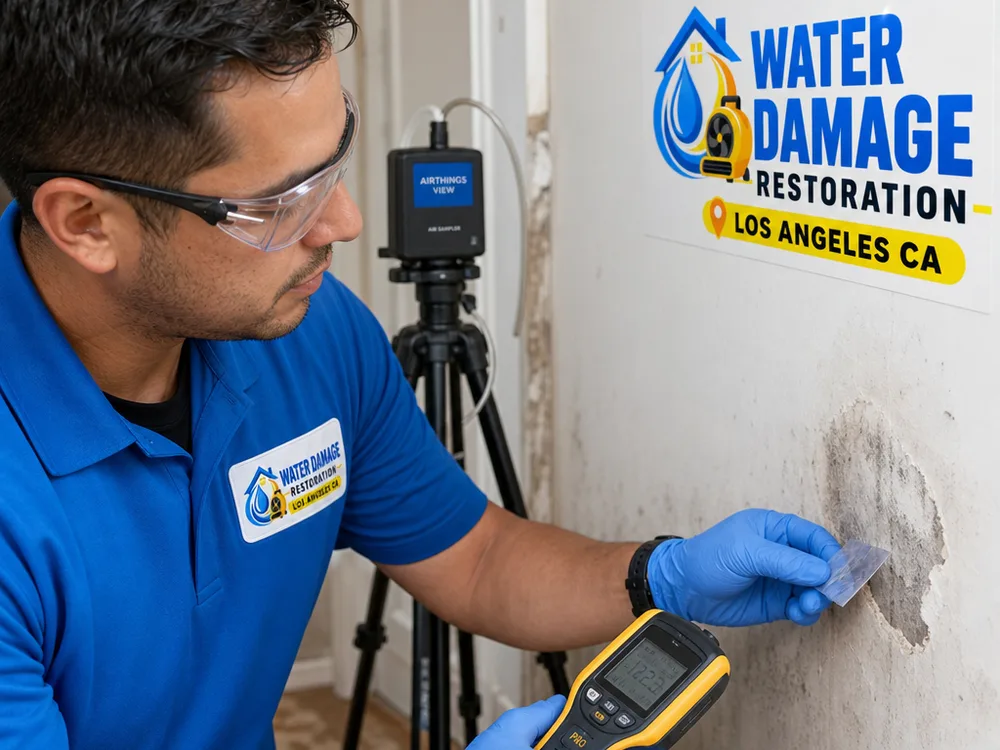
You get a written scope of observed conditions, moisture readings, and where further investigation is warranted, so decisions are based on evidence.
We focus on what is feeding the problem, such as plumbing leaks, shower pan issues, window intrusion, or HVAC condensation.
We recommend air or surface samples when they will answer a specific question, like confirming suspected hidden growth or verifying containment needs.
If remediation is needed, you'll know which areas are impacted, what should be isolated, and what a reasonable cleanup plan looks like.
From older plaster-and-lath walls to newer drywall and tight condo mechanical closets, we tailor the approach to how LA buildings are actually constructed.
From intake to clear findings
We ask where you're seeing symptoms, whether there was a leak, and which rooms are involved. For condos or multi-unit buildings, we also note shared walls and recent upstairs water events.
We inspect the affected area and surrounding materials, then take moisture readings to narrow down where water is present now or was present recently. This often determines whether a small access point is justified.
If samples are needed, we collect them strategically and document exact locations. This can include indoor and outdoor air comparisons or surface sampling where growth is visible.
You receive a report summarizing observations, measurements, and lab results if taken, along with recommended next steps. We explain what is urgent and what can be planned.
If cleanup is needed, we outline containment considerations, drying requirements, and what post-remediation verification should look like before areas are closed back up.
Inspection shaped by the building
Los Angeles homes vary widely by age and construction style, and that changes where moisture hides.
Request Emergency ServiceOlder homes in areas like Highland Park and Echo Park often have layered renovations. Multiple wall finishes and patched plumbing runs can make slow leaks harder to spot until staining or odors appear.
Condo buildings in Downtown LA and Koreatown commonly have shared plumbing stacks and units above and below. Moisture can travel from a neighboring unit and appear far from the original leak.
Coastal neighborhoods such as Venice and Santa Monica can see persistent humidity, increasing condensation risk around HVAC lines, closets with limited airflow, and bathrooms without effective exhaust.
We also examine common LA moisture entry points: window and stucco transitions after wind-driven rain, shower surrounds and grout failures, and AC condensate lines that back up in summer. The goal is to fix the cause, not just the visible symptom.
Planning the inspection
Mold inspection in Los Angeles typically ranges from about $250 to $750, depending on home size, the number of areas being evaluated, and whether sampling is needed. A straightforward inspection for one suspected area is usually at the low end, while multi-room investigations with multiple air or surface samples trend higher.
Final pricing depends on access to attics or crawl spaces, how many readings and samples are required, and whether prior water damage makes the investigation more complex. Exact cost is confirmed after we understand the scope and property conditions during scheduling or on site.
“We had a musty smell that kept coming back. The inspector traced it to moisture behind the vanity and explained what readings meant instead of just pointing at spots. The report was clear enough that our contractor knew exactly what to open up and dry.”
Samantha R.
“After an upstairs leak in our condo, we needed documentation. The inspection included moisture mapping of the ceiling and walls and a straightforward plan for what to remediate and what to monitor.”
David L.
Answers before you act
Most mold inspections take 60 to 120 minutes on site, depending on the size of the home and how many areas need moisture mapping. Tight access can extend the visit, and laboratory results add turnaround time if samples are collected.
Air testing is useful when it answers a specific question, such as suspected hidden growth with no visible source or when documentation is needed for a clearance-style decision. With obvious growth and moisture, mapping and a remediation plan may matter more than sampling every room.
We can often identify high-probability areas using moisture meters and, when conditions allow, infrared imaging, but hidden mold cannot be confirmed with certainty without access. The inspection narrows down likely locations so openings can be minimal and purposeful.
No. Mold inspection documents conditions and identifies moisture sources, while remediation is physical removal and cleaning under containment. Many clients start with inspection to avoid unnecessary demolition and target the correct areas.
Leave suspected areas as-is, avoid ozone or heavy fragrances, and keep windows closed for a few hours beforehand if air sampling may be used. Have leak photos and plumber or HOA notes available so the timeline can be connected to current conditions.
Yes. For multi-unit buildings, we pay extra attention to shared walls, ceiling cavities below bathrooms and kitchens, and possible sources from adjacent units. We can also structure documentation around HOA access and scheduling requirements.
Tell us what you're seeing and where it's happening. We'll schedule a mold inspection, document the moisture conditions, and give you a clear plan for what to fix next.