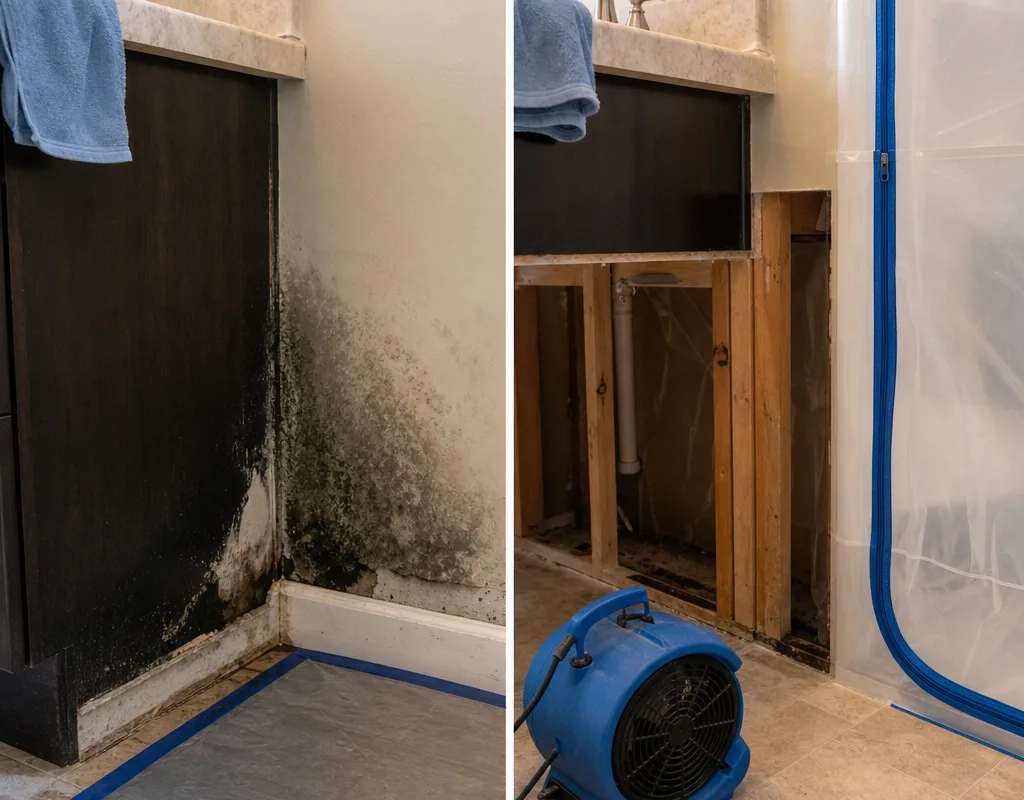
A written scope before major removal
You get a clear description of affected areas, what is being removed versus cleaned, and what the work area will look like when complete.
Serving Los Angeles CA & surrounding areas
24/7 Emergency Response
Get a clear plan before the problem spreads. If you smell a musty odor, see staining, or had a recent leak, our certified team contains the area, removes contaminated materials safely, and documents the work so you can move back in with confidence.
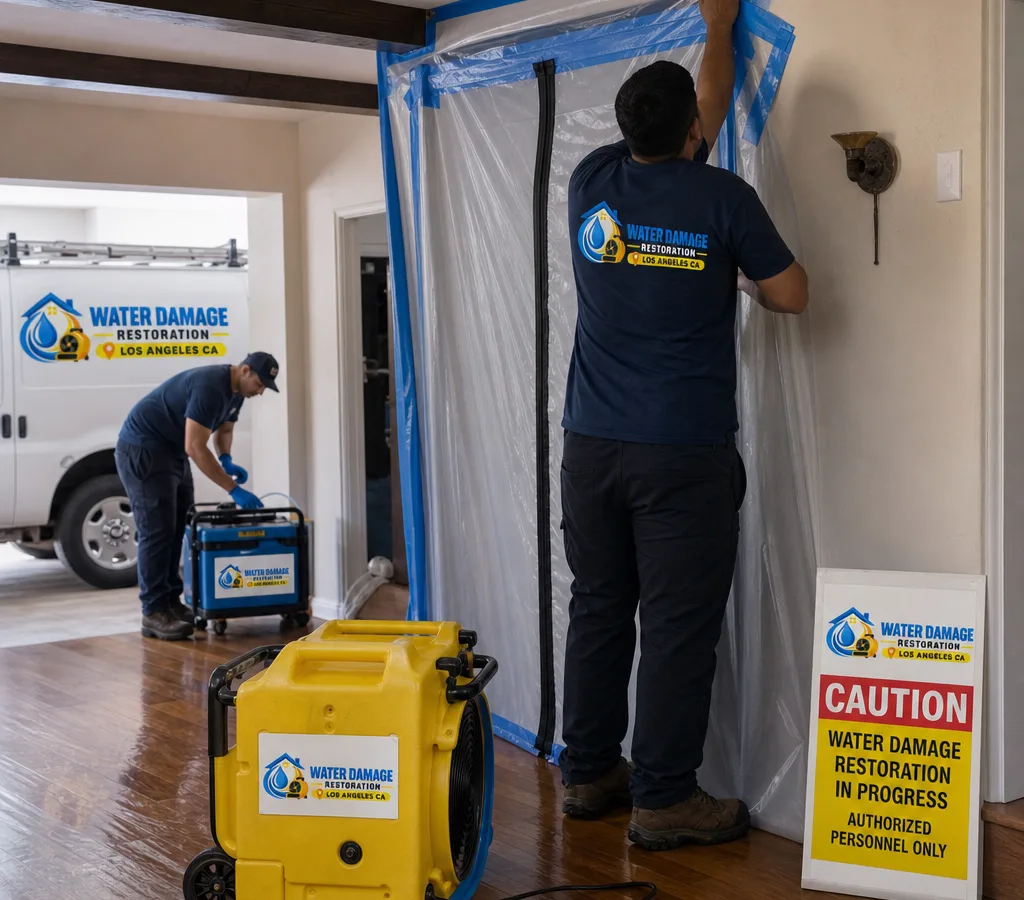
Controlled cleanup from start to finish
Hiring a mold remediation company in Los Angeles is less about buying a single treatment and more about getting a controlled process: find the affected materials, stop cross-contamination, remove what cannot be cleaned, and dry the structure so mold does not return.
Los Angeles homes often have mixed building ages and a wide range of construction types. Older plaster walls, crawlspaces, and additions can hide moisture paths. Newer, tightly sealed units can trap humidity. In neighborhoods with many multi-family buildings like Koreatown, mold can involve shared walls and limited access for equipment. In hillside areas like Hollywood Hills, wind-driven rain and roof runoff can show up as hidden moisture behind exterior walls. Along the coast in Santa Monica, marine air and condensation around windows can keep materials damp longer.
Good remediation focuses on source control. If moisture is still present—a leak, a wet subfloor, or an HVAC condensation issue—any cleaning is temporary. When remediation is done right, you should be able to answer three questions in writing: What areas were impacted, what was removed or cleaned, and what moisture conditions were confirmed dry at the end.
Safety-led remediation
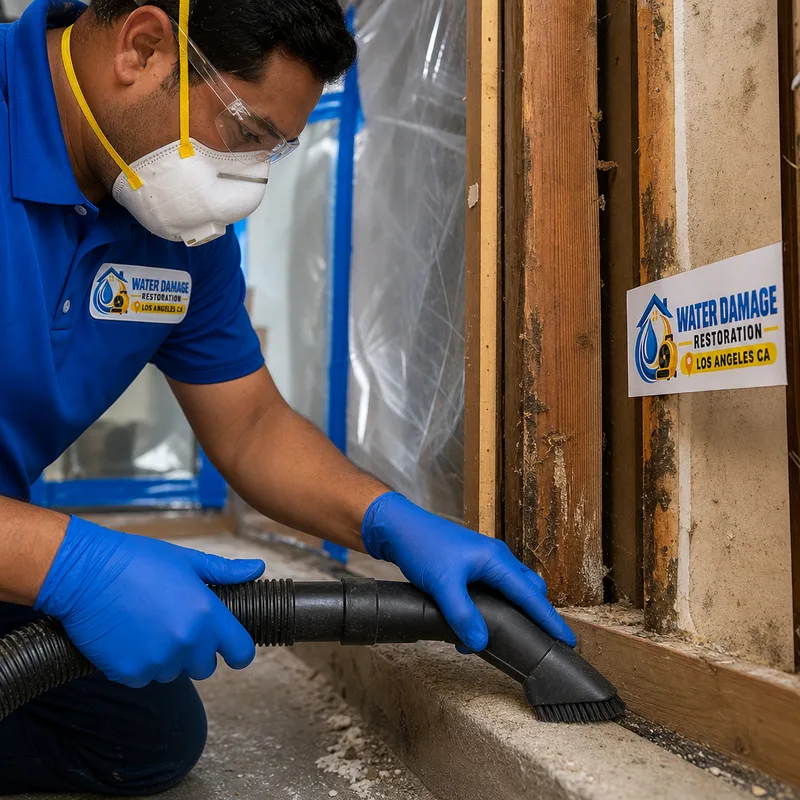
Mold remediation is a safety job first. We follow industry-standard practices that prioritize containment and airborne particle control before demolition or cleaning begins.
What our crews do on-site typically includes:
If your situation began with a leak or flooding, stabilizing the building first often prevents mold from spreading while remediation is scheduled.
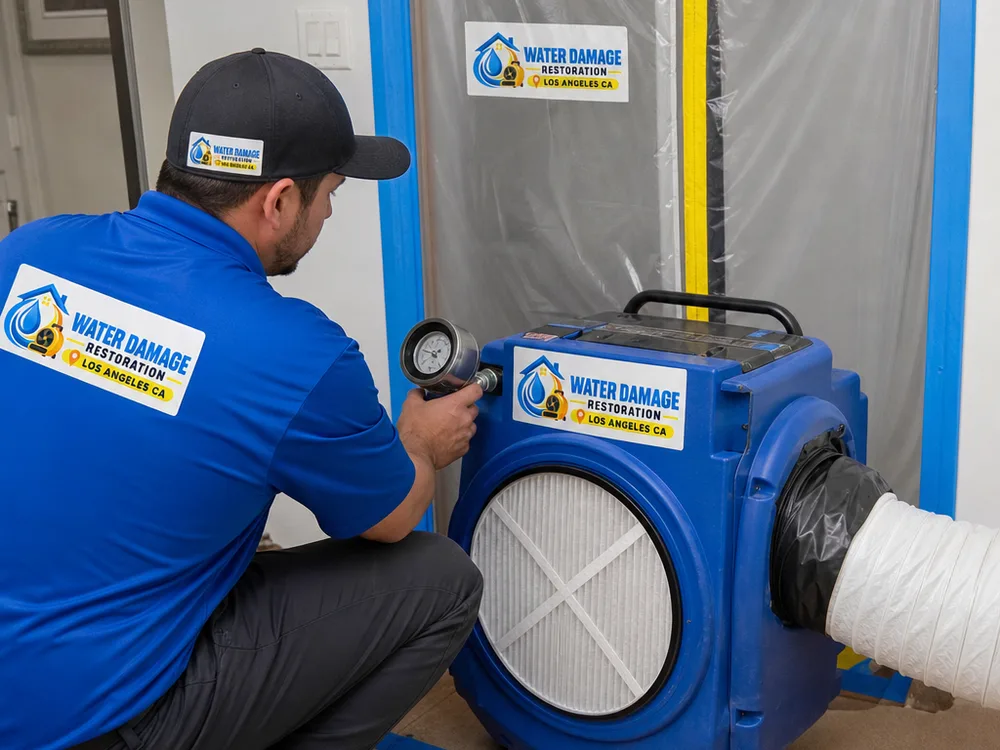
You get a clear description of affected areas, what is being removed versus cleaned, and what the work area will look like when complete.
We do not treat every job like a quick wipe-down. When conditions require it, we build proper containment and run HEPA filtration to control spread.
We look for wet materials and the path that kept them wet, then build the plan around drying and prevention.
We plan around access, pets, and daily routines and explain when a room needs to be off-limits and for how long.
We document containment, removal, and post-work conditions for property files, landlords, or adjusters when relevant.
Straightforward project pricing
Mold remediation in Los Angeles typically ranges from about $1,500 to $6,500+, with small, contained areas often landing around $1,500 to $3,000 and larger multi-room or hidden-growth projects running $3,500 to $10,000+.
Your final price depends on how far the mold spread, how much demolition is required—such as drywall, insulation, or cabinets—whether full containment and negative air are needed, and how much drying and verification is required. The exact cost is confirmed after an on-site inspection and a written scope.
A clear path from assessment to repairs
We review the affected areas, discuss the history, and map out what needs to be contained, removed, cleaned, and dried.
You receive a clear scope and schedule. If the home is occupied, we plan containment boundaries and the safest path for moving materials out.
We set barriers and, when appropriate, establish negative pressure with HEPA filtration to keep spores from migrating to clean areas.
Unsalvageable porous materials are removed. Remaining structural surfaces are HEPA vacuumed and damp wiped, then the area is dried and monitored.
We confirm the work area is clean and dry and explain which drywall, paint, trim, or other finish repairs are needed.
Answers before work begins
Start times depend on the size of the affected area and whether the property needs immediate containment, but urgent situations are typically prioritized. If there was a recent leak or active moisture, the fastest path is to stabilize conditions first, then complete remediation with containment and removal based on a written scope.
Many projects can be completed while you stay home if the work area is properly contained and access is controlled. If the affected area is a main living space, demolition is extensive, or sensitive occupants are present, it may be safer to stay out of the work zone or temporarily relocate.
Yes. Hidden growth commonly requires selective demolition. The scope may involve opening the affected area, removing materials that cannot be cleaned, HEPA cleaning the remaining structure, and drying the cavity before repairs.
A solid scope lists the exact areas involved, containment, materials to be removed versus cleaned, HEPA or negative-air filtration, and the drying and verification steps. For rentals and multi-family buildings, it should also clarify access and protection for common pathways.
Testing is not always required, but it can help when an affected area is large or the cause is unclear. If post-work clearance testing is requested, it should be coordinated after the area is fully dry and cleaned.
Mold returns when moisture returns. Common causes include unrepaired leaks, persistent condensation, and wet materials being closed before drying is complete. Moisture checks and clear drying targets reduce the chance of a repeat problem.
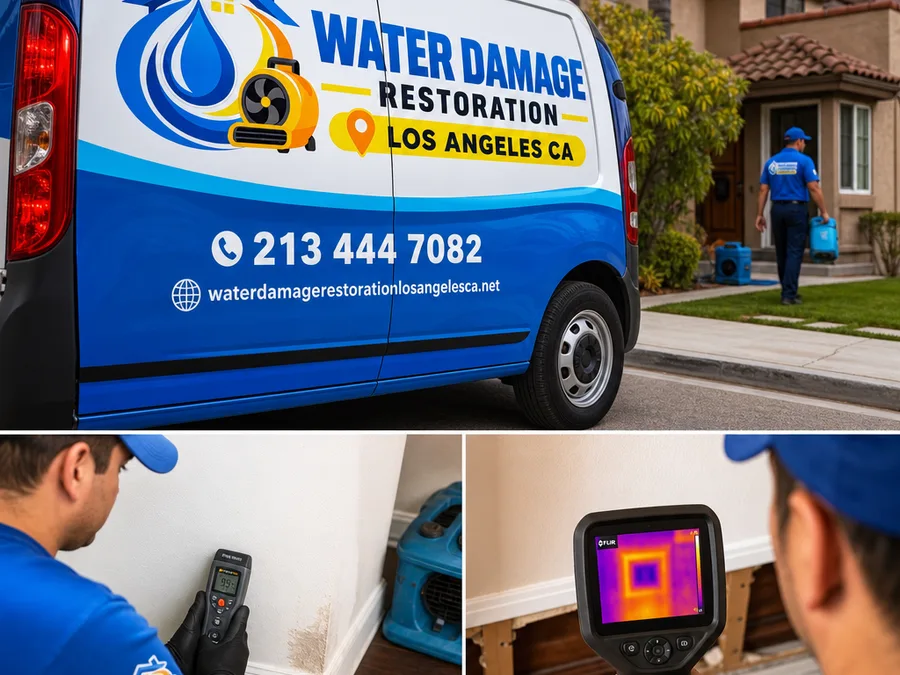
Tell us what you are seeing and where it is happening. Water Damage Restoration Los Angeles CA will assess the affected areas, explain the safest containment approach, and provide a written scope with straightforward pricing before major work begins.