Rapid containment to limit secondary damage
We isolate wet areas with plastic barriers when needed, protect walk paths, and prioritize stopping water migration into adjacent rooms, closets, and shared walls.
Serving Los Angeles CA & surrounding areas
24/7 Emergency Response
Leak, flood, or burst pipe? We inspect, stop the spread, dry fast, and rebuild the damaged areas with a clear scope and documented progress so you can make decisions quickly.
Measured drying, careful repair
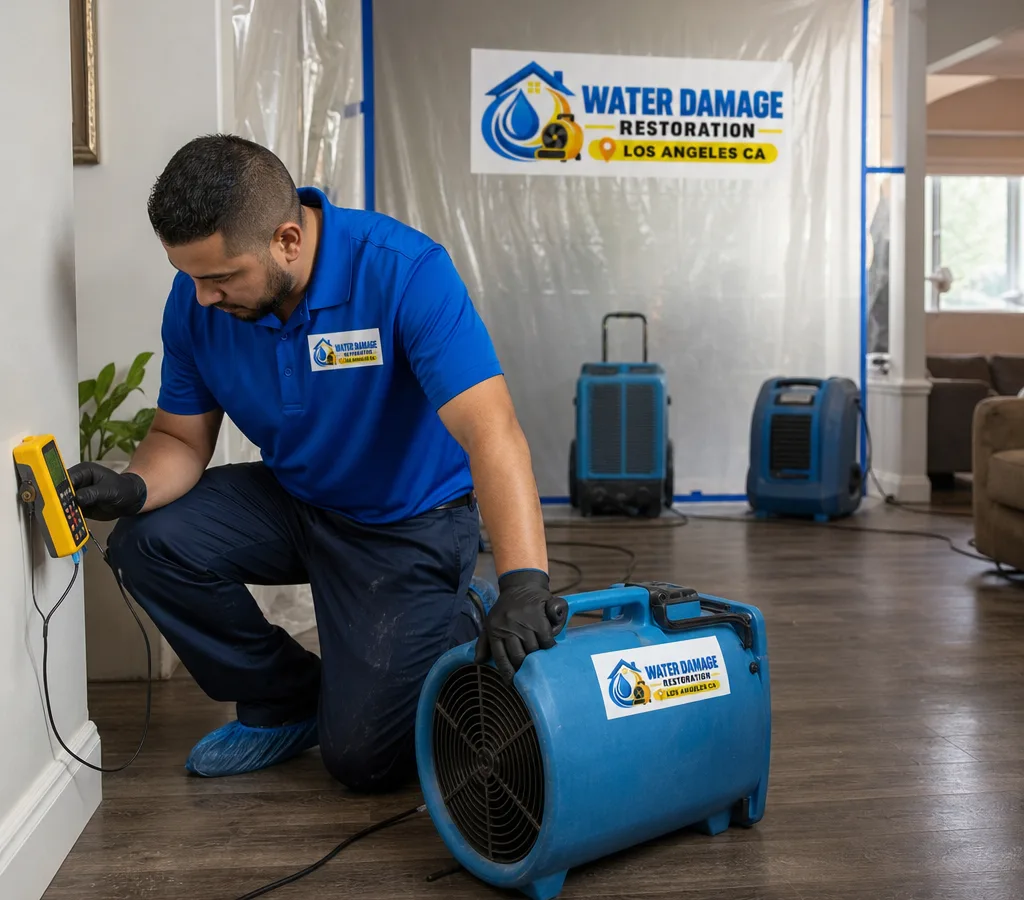
When water gets into drywall, flooring, or cabinets, the damage keeps spreading until the source is controlled and the structure is dried. Our team at Water Damage Restoration Los Angeles CA handles los angeles water damage repair for homes, condos, and small commercial spaces, focusing on what matters in the first hours: identifying the water source, protecting unaffected rooms, and creating a drying plan based on actual moisture readings.
Los Angeles properties often mix older plaster walls with newer drywall additions, wood subfloors under tile, and tight multi-family layouts where water can travel into a neighbor's unit. That means water damage repair los angeles work has to be methodical: we map moisture, open only what needs to be opened, and dry the structure to a verifiable endpoint before repairs are closed up.
If you are comparing providers, the most important difference is whether they treat drying as a measured process. We use moisture meters and consistent documentation so you can see what is wet, what is drying, and what is ready for repair. For a broader overview of related restoration work, many clients start with water restoration in Los Angeles when they are trying to understand the full sequence after a loss.
A clear path from wet to repaired
We isolate wet areas with plastic barriers when needed, protect walk paths, and prioritize stopping water migration into adjacent rooms, closets, and shared walls.
We check materials (drywall, framing, subfloors) with moisture meters and adjust air movement and dehumidification to the conditions in your space.
You get a written plan that separates drying and cleanup from repair work, so you know what is being removed, what is being saved, and what gets rebuilt.
We repair drywall, baseboards, trim, paint-ready surfaces, and common flooring transitions so the finished area blends back into the home.
Condos and apartments require coordination, quiet hours awareness, and careful equipment placement. We plan for access, parking, and elevator rules where applicable.
Leaks, overflows, and water intrusion
Los Angeles water damage repair can start from a small leak that goes unnoticed or a sudden event that soaks a room in minutes. Either way, the work is usually a mix of controlled demolition (only where needed), structural drying, cleaning, and then rebuilding finishes.
Typical scenarios we handle include:
Neighborhood layout changes the approach. In Koreatown and other dense areas with many multi-family buildings, we often focus on rapid containment and documenting moisture migration through shared walls and floors. In the Valley, single-family homes can have larger footprints where equipment layout and airflow planning matter. In Downtown Los Angeles lofts, polished concrete and finished surfaces mean extra care to prevent staining and to control humidity in open-plan spaces.
From inspection through rebuild
We start by locating the origin (supply leak, drain backup, roof intrusion) and noting any safety concerns. Clean water, gray water, and contaminated water require different handling and cleaning steps.
We set protection for floors and walk paths, isolate rooms when dust control is needed, and plan equipment placement so airflow reaches wet materials without damaging unaffected finishes.
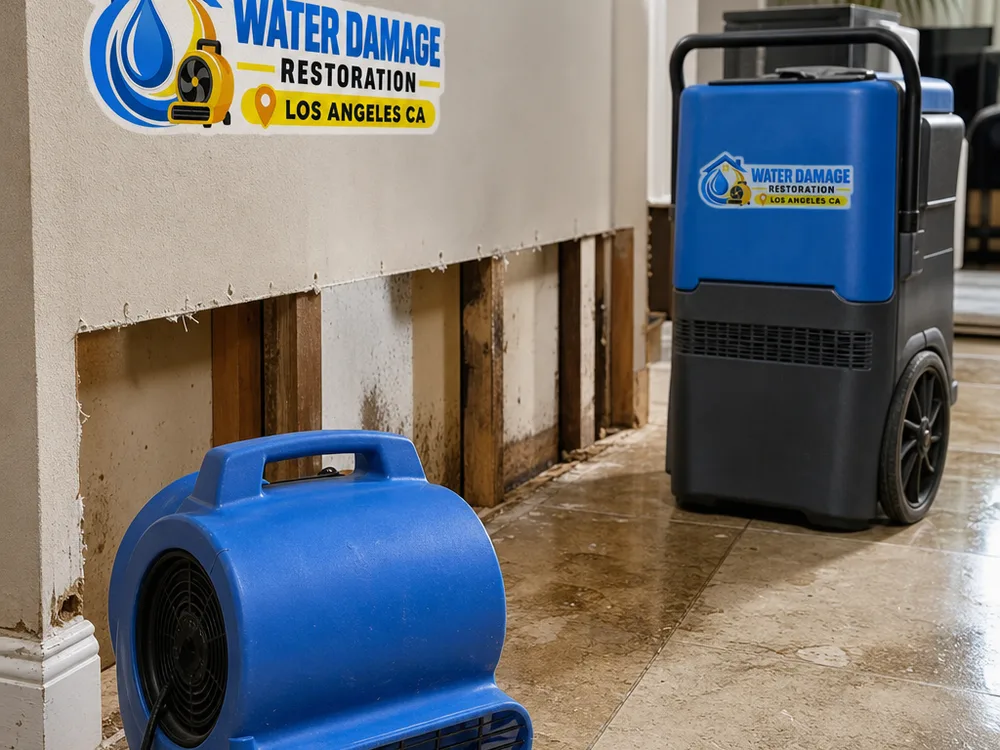
Standing water is extracted first. If drywall, insulation, or flooring is saturated beyond practical drying, we remove it in a controlled way to expose the structure and prevent trapped moisture.
We run air movers and dehumidifiers sized to the space and monitor moisture levels over time. Drying is not a guess; we verify when materials are back to an acceptable dry standard before closing cavities.
When conditions warrant, we clean and apply antimicrobial products to affected structural surfaces. For unpleasant odors, we use targeted deodorization methods after the wet materials are addressed.
Once dry, we move into repairs: drywall replacement, texture matching where possible, baseboard and trim, paint-ready prep, and common flooring transitions so the room looks normal again.
Plan the scope with clear numbers
Water damage repair in Los Angeles typically ranges from about $1,500 to $7,500 for many residential jobs, with larger losses or multi-room rebuilds running $10,000+. A small, contained leak with limited drywall removal and drying is often at the lower end, while a kitchen, bathroom, or ceiling loss with flooring and cabinet work moves the cost up quickly.
Final pricing depends on the water category, how far moisture traveled, the amount of demolition needed to dry correctly, access (upper floors, tight condos), and what finishes must be rebuilt. The exact cost is confirmed after an on-site inspection and moisture mapping.
“We had a leak that soaked the wall behind the vanity and started bubbling paint in the hallway. They showed us moisture readings, cut only what needed to come out, and kept the drying equipment tidy in a small condo.”
Maya R.
“After a water heater failure, the garage and laundry room were a mess. The crew documented everything and the repairs looked normal again once the drywall and trim were replaced.”
Daniel S.
“The biggest help was having a clear plan. We knew what was getting dried, what was being removed, and what the repair steps were before any rebuild started.”
Erica L.
Answers before repair begins
Start the same day whenever possible because wet drywall, baseboards, and subfloors can hold moisture and spread it into adjacent materials. While you wait for a professional inspection, stop the water source if safe, move items off wet floors, and avoid running HVAC if it is pulling humid air through the affected area.
We can handle both the drying phase and the repair work so the project stays coordinated from demo to rebuild. That includes drywall replacement, trim and baseboards, and getting the surfaces ready for paint and finish work once moisture readings confirm it is safe to close up.
It depends on how saturated it is, how long it has been wet, and whether the water is clean or contaminated. Drywall that is swollen, crumbling, or affected by gray or contaminated water is usually removed; otherwise, a controlled flood cut and cavity drying may be enough if we can verify drying with moisture readings.
Yes. Multi-unit properties often require added containment, careful equipment placement, and coordination with building rules for access and noise. We also pay close attention to shared walls and ceilings because water can travel into neighboring units.
Yes, we can document the affected areas, drying equipment setup, and moisture monitoring so there is a clear record of what was wet and when it reached a dry standard. Insurers and property managers often want this kind of documentation for a water damage repair los angeles claim file.
Many projects dry in about 3 to 5 days, but the timeline depends on materials, how long they were wet, and how enclosed the cavities are. We begin repairs after we confirm with moisture readings that framing, subfloors, and surrounding materials are dry enough to close.
Tell us what happened and what areas are affected. We will schedule an on-site inspection, map moisture, and give you a clear scope for drying, cleanup, and repair work in Los Angeles.