Moisture mapping, not guesswork
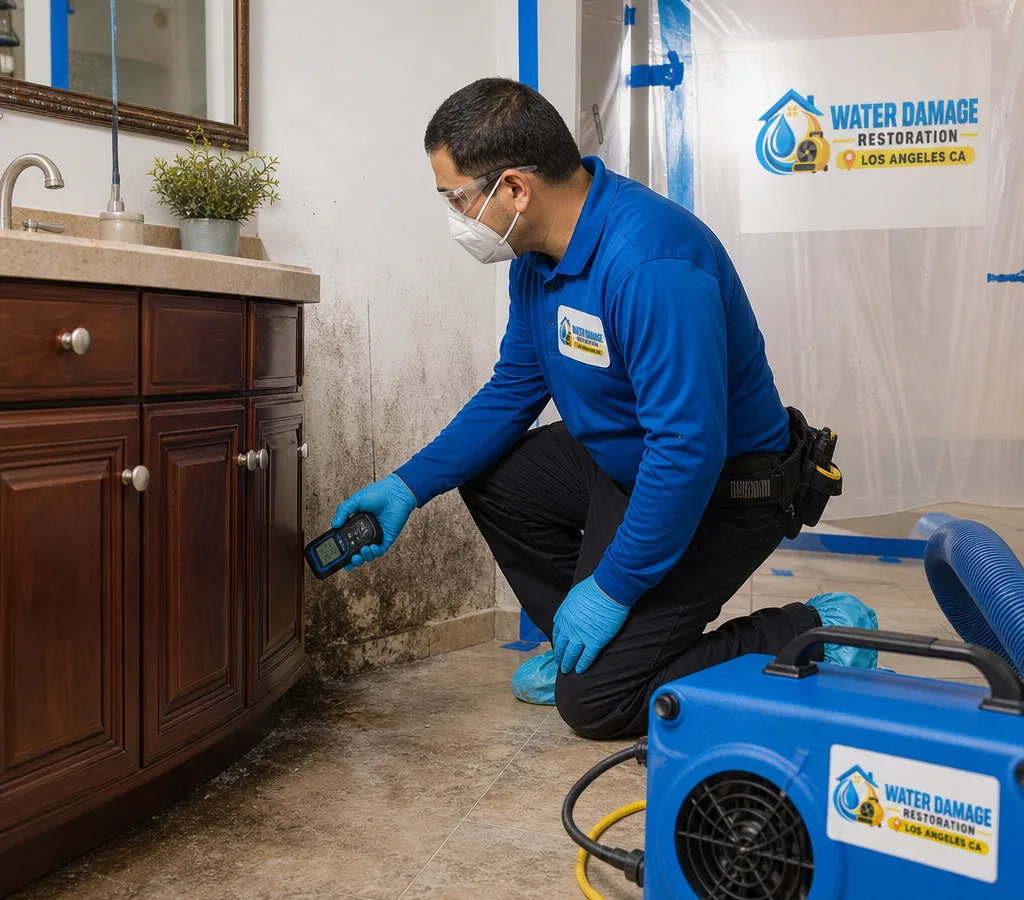
We use non-invasive checks first, then confirm with meters where needed. The goal is to define the wet area so removal is limited to what is actually affected.
Serving Los Angeles CA & surrounding areas
24/7 Emergency Response
Get a clear inspection and written plan before cleanup begins. We target the moisture source and safely address affected materials so the problem does not keep coming back.
Start with the source
If you are searching for a mold specialist Los Angeles homeowners can trust, you are usually dealing with one of two problems: water got in—often from a plumbing leak, roof intrusion, or HVAC condensation—and it stayed in long enough for growth to start. Surface cleaning might make a wall look better for a week, but it does not fix wet drywall, damp framing, or contaminated insulation.
At Water Damage Restoration Los Angeles CA, our mold work starts with moisture detection and source control. In Los Angeles, that often means tracking slow leaks inside walls in older housing stock, checking bathroom exhaust performance in tightly sealed condos, or finding hidden dampness around window openings after wind-driven rain.
You get straight answers, practical options, and a scope that matches the condition of your home. If you are also dealing with an active leak or recent flooding, the right first step is stabilizing the structure and drying materials; our water damage restoration work supports that same goal so mold does not get a head start.
Controlled, documented cleanup
We use non-invasive checks first, then confirm with meters where needed. The goal is to define the wet area so removal is limited to what is actually affected.
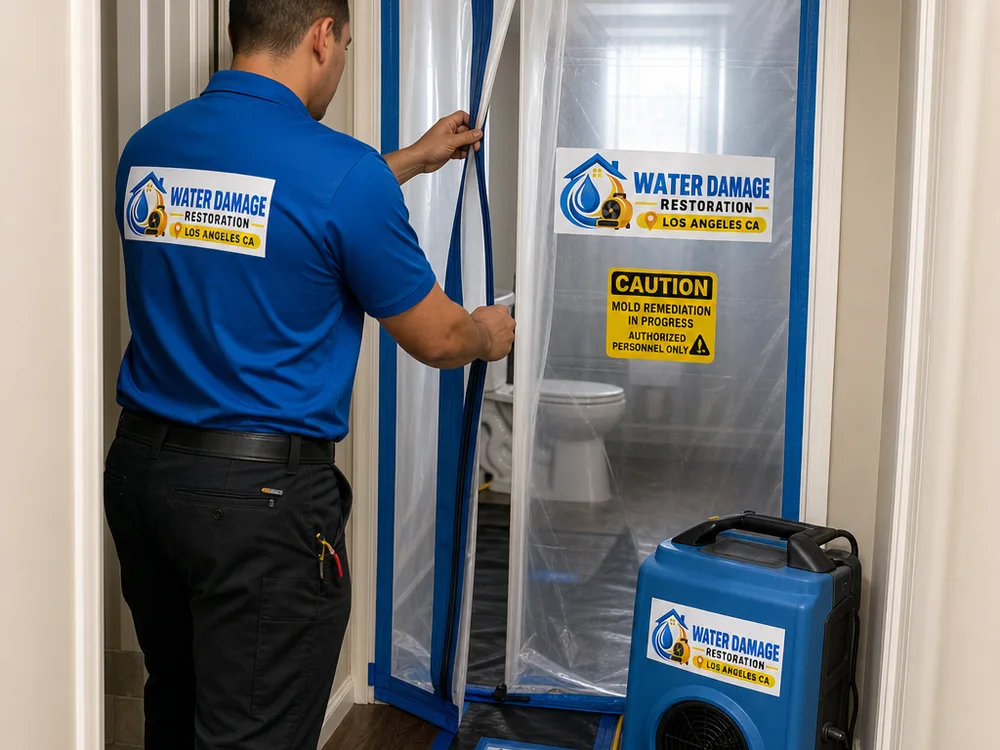
For meaningful growth or dusty demolition, containment with poly sheeting or zip walls and negative air filtration helps keep spores from spreading into clean rooms.
Porous materials like drywall, insulation, carpet pad, and some ceiling textures can hold contamination and often need removal. Sound semi-porous and non-porous surfaces may be cleanable.
HEPA vacuuming and careful wipe-downs target settled particles after removal. This is where shortcuts show up later as odors or recurring spotting.
No cleanup holds if materials stay damp. We set drying targets and verify moisture levels before containment comes down.
You receive a clear outline of what gets removed, what gets cleaned, what equipment is used, and what needs repair afterward, including drywall, paint, and trim.
Moisture behaves differently in every building
Mold problems in Los Angeles come from very normal building conditions and day-to-day moisture, especially where ventilation or drainage is limited.
Typical situations include:
Neighborhood and building type can change the approach. In Downtown Los Angeles and Koreatown, multi-family and condo buildings can mean shared plumbing chases and tighter access for containment. In the San Fernando Valley, hotter summers and heavy air-conditioning use can drive condensation issues if return air is restricted or humidity is trapped in closets and corners. On the Westside, coastal air and older window assemblies can contribute to recurring dampness around sills if drainage paths are compromised.
The goal is the same in every case: identify the wet material, isolate the work area, remove or clean correctly, then verify dryness before any rebuild.
From inspection to clearance-ready
We ask where you see staining, smell odors, or notice recent leaks. If anyone has sensitivities, we plan the work to reduce exposure from the start.
We inspect likely sources—including plumbing penetrations, shower assemblies, HVAC condensation points, and window areas—and map moisture to set the true boundaries of work.
You get a clear plan that matches the condition: what gets removed, what can be cleaned, what needs drying, and what repairs follow. With your approval, we can coordinate with a landlord, property manager, or insurance adjuster.
We protect floors and contents, build containment when needed, and use HEPA filtration to control airborne particles during demolition and cleaning.
After removal, we clean remaining structural elements and verify drying progress. If moisture stays elevated, we pause rebuild planning until the structure is stable.
We leave the area clean and ready for repairs. If a third-party clearance test is requested, the space is prepared to support that process.
Understand the scope before work begins
Most mold inspection and cleanup work in Los Angeles typically ranges from about $750 to $6,000+, depending on how much material is affected and whether containment and negative air are needed. A small, accessible area—for example, limited growth under a sink—may sit toward the low end, while multi-room removal with drying equipment and rebuild preparation can reach the high end.
Final pricing depends on the square footage involved, the material types such as drywall and insulation versus tile and framing, access conditions including tight crawlspaces or high ceilings, how long moisture has been present, and whether contents need protection or relocation. The exact cost is confirmed after the on-site inspection and a written scope.
“They did not try to scare us. The tech showed where the moisture was coming from behind the vanity, explained what had to be removed, and set up containment so the rest of the apartment stayed clean.”
Ariana M.
“What I appreciated was the documentation. We got a clear scope and photos, and the crew kept the area under negative air while they removed the damaged drywall. The musty smell was gone once everything was dry.”
Chris L.
Straight answers before cleanup
Sometimes, but only when the affected surface is non-porous or semi-porous and the drywall core is not wet or contaminated. In many bathroom and leak situations, the paper facing or insulation behind drywall holds growth, so removal is the safer choice. A moisture check and a look behind trim or fixtures usually tells us which path is realistic.
In urgent cases we can often schedule a rapid inspection and, if appropriate, begin containment and drying quickly because stopping moisture is time-sensitive. Availability depends on job size and whether the building requires access coordination, which is common in condos and multi-family properties.
Mold returns when moisture returns. Proper remediation removes or cleans impacted materials and then verifies the structure is dry, but long-term prevention depends on fixing the underlying cause, like a slow supply line leak, recurring shower pan seepage, or HVAC condensation.
We can discuss sampling based on your situation, but we do not treat testing as a substitute for inspection and moisture detection. If you want independent confirmation, many Los Angeles clients choose a third-party hygienist for pre- and post-work sampling so the same company is not both remediating and certifying.
Often yes for small, well-contained areas, but it depends on the location, the amount of demolition, and any health sensitivities. We will walk you through containment, filtration, and practical options like keeping certain rooms closed off during work.
If you can do so safely, stop the water source and avoid disturbing the area—do not scrub or sand it—since that can spread particles. Clear a path to the affected space, and let us know about recent leaks, past repairs, or any areas where paint has bubbled or flooring has lifted so we can check for hidden moisture.
Tell us what you are seeing and where it is happening. We will schedule an inspection in Los Angeles, explain what is actually affected, and provide a written scope for cleanup, drying, and the next repair steps.