
A written scope before demolition
You should know exactly which rooms are affected, what materials are coming out, what stays, and what the cleanup steps are before anything is opened up.
Serving Los Angeles CA & surrounding areas
24/7 Emergency Response
Contain the affected area and remove contaminated materials safely. If you smell musty odors, see staining, or have had a recent leak, we provide inspection, containment, safe removal, and cleanup so the space can be used again with confidence.
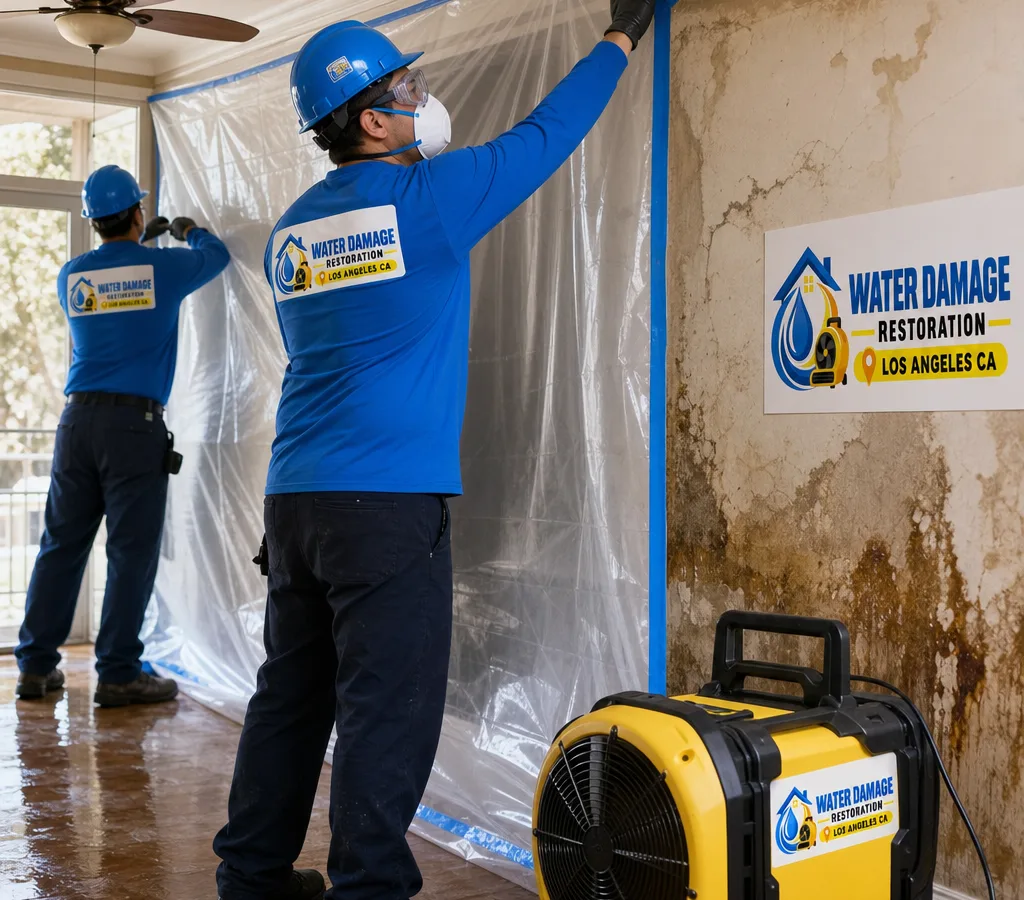
Act before disturbance spreads spores
Searching for a mold removal company Los Angeles homeowners and property managers can trust usually starts after a leak, a slow plumbing drip, or a humidity problem that went unnoticed. Mold can spread through porous building materials and travel as airborne spores when disturbed, so the goal is not to “spray and pray.” The goal is to isolate the work area, remove contaminated materials correctly, clean what can be saved, and address the moisture source that allowed growth in the first place.
Los Angeles properties bring a few common patterns. In older neighborhoods like Highland Park, aging plumbing behind walls can create small, long-term leaks that show up as mold around baseboards or inside cabinets. In Mid-City and Koreatown, shared walls and multi-unit layouts mean containment and neighbor protection are a bigger part of planning.
In coastal areas such as Venice, damp air and salt-laden breezes can keep surfaces from drying quickly after a leak, raising the chance of regrowth if drying is rushed. In Downtown Los Angeles lofts and mixed-use buildings, HVAC and condensate lines are frequent culprits when moisture shows up without a clear plumbing event.
Our team at Water Damage Restoration Los Angeles CA focuses this service on one outcome: a safe, verifiable mold cleanup with clear documentation of what was removed, what was cleaned, and what needs to be repaired next.
A controlled, documented cleanup
You should know exactly which rooms are affected, what materials are coming out, what stays, and what the cleanup steps are before anything is opened up.
Critical for preventing cross-contamination. Proper barriers, filtered exhaust, and controlled entry keep spores from spreading through the home or building.
Mold remediation that ignores the leak, condensation, or humidity problem sets you up for regrowth. The plan should account for why the area got wet.
Drywall and insulation often need removal. Many framing components can be cleaned and treated. The approach should match the material, not a one-size product.
After remediation, you should receive guidance on what needs repair or replacement so your contractor can close walls and restore finishes correctly.
For homes and active businesses, staging work by area, controlling dust, and keeping pathways safe makes a big difference in daily disruption.
Control the work zone
Professional mold removal is mostly about controlling what you cannot see. A proper setup usually includes:
In Los Angeles, we often see mold in bathrooms without strong exhaust ventilation, under kitchen sinks with slow supply-line drips, around window perimeters after wind-driven rain, and in closets on exterior walls where airflow is limited. During inspection, we focus on the building patterns that hide moisture, not just what is visible on the surface.
If the mold is tied to a recent leak or flood event, coordination matters. Many clients start with Los Angeles water restoration to stabilize moisture quickly, then move into containment and remediation once the affected materials are identified.
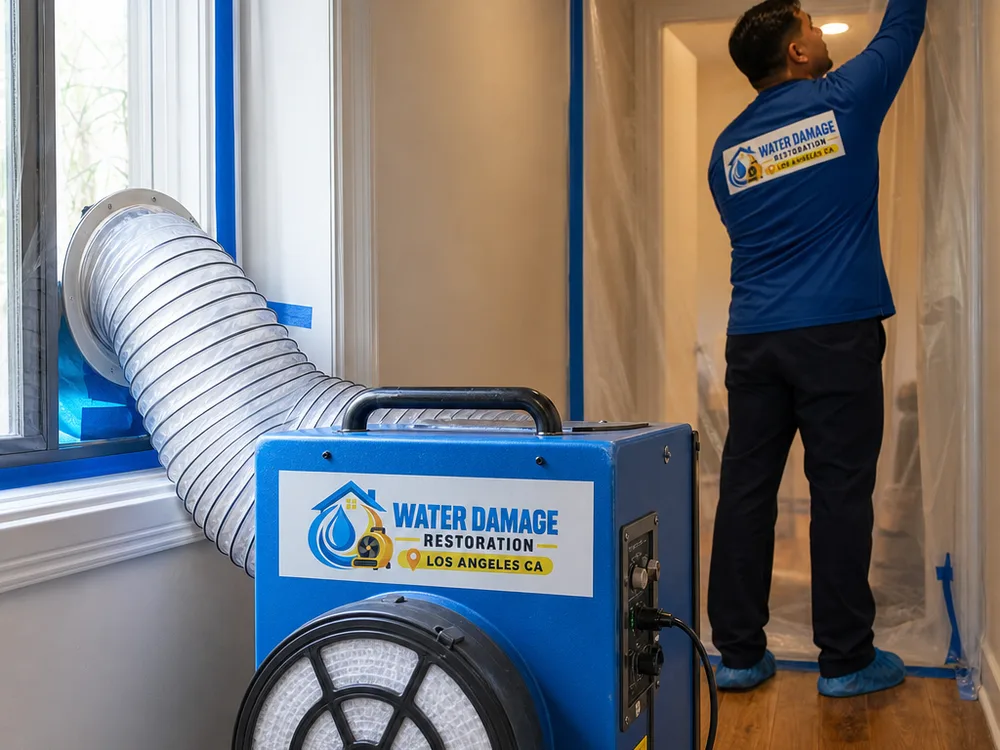
From inspection to documentation
We assess visible growth, musty odor areas, and likely moisture pathways such as plumbing, HVAC condensate, roof, or window intrusion. You get a practical explanation of what we think is happening and what may need to be opened to confirm the extent.
We isolate affected areas with barriers and establish negative pressure when needed, especially in condos, multi-unit properties, and homes with central return air nearby.
Porous materials that cannot be reliably cleaned are removed and bagged out. We keep demolition controlled to limit airborne disturbance.
We HEPA vacuum structural surfaces and perform damp wiping on remaining framing and substrates, then apply targeted treatments based on material and condition.
A dry structure is the foundation of a lasting result. We check moisture conditions before containment comes down so you are not sealing a problem back into the wall.
We review what was removed, what was cleaned, what still needs repair, and what to watch for after rebuild, including ventilation, exhaust fans, condensate lines, and leak monitoring.
Pricing depends on the affected scope
Mold removal in Los Angeles typically ranges from about $1,500 to $6,500 for many residential projects, with small, contained areas sometimes starting around $800 to $1,500 and larger multi-room or HVAC-adjacent jobs running $7,500+ depending on scope. Price is driven most by the size of the affected area, how much drywall or cabinetry needs removal, access such as tight crawlspaces or stacked units, and whether drying equipment and post-remediation verification are needed. The exact cost is confirmed after an on-site inspection and a written scope.
Request Emergency ServiceContained, cleaned, ready for repair
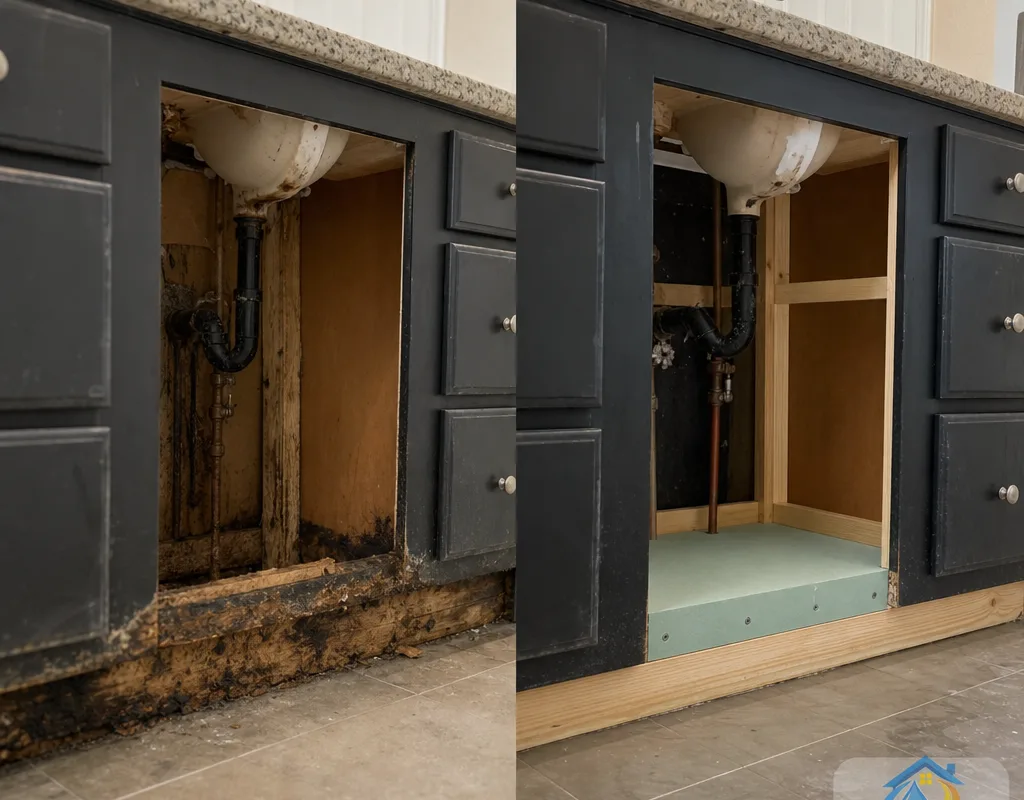
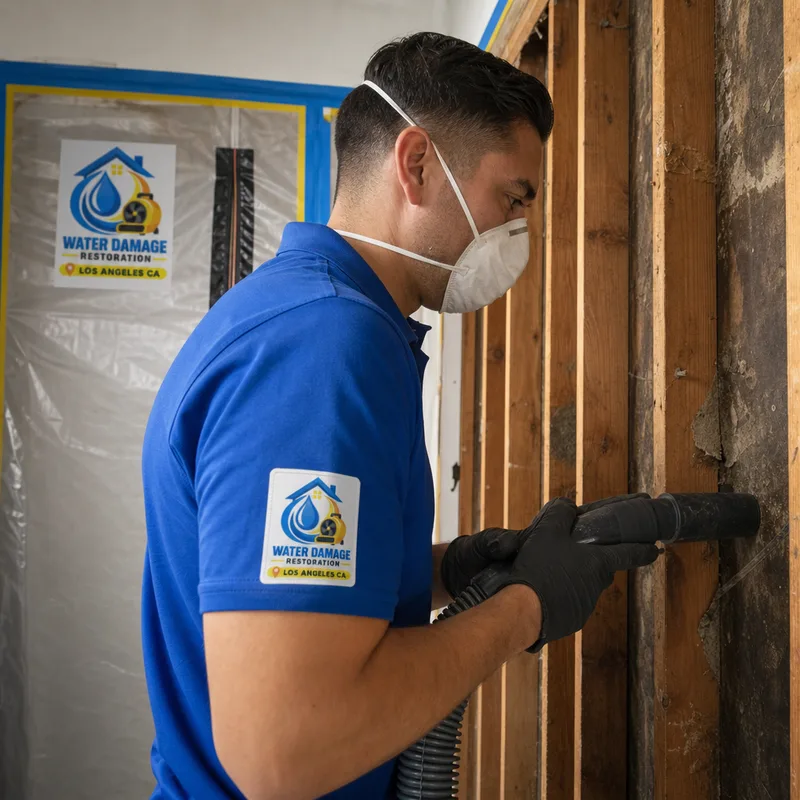
Answers before remediation starts
Start times depend on scope and whether the area is actively wet, but urgent situations are typically scheduled as soon as possible because moisture drives spread. If there is an ongoing leak or recent water intrusion, stabilizing the moisture and setting containment early helps prevent additional rooms from being impacted.
Drywall is often removed when mold growth is on the back side, the paper facing is contaminated, or the material has been wet long enough that it cannot be reliably cleaned. When growth is limited to surface conditions on non-porous materials, cleaning may be possible without demolition, but the decision should be based on where the mold is, not just what you can see.
Many projects can be completed while a home is occupied when containment and negative air are set up correctly and pathways are kept separate. For larger jobs, sensitive occupants, or when work is near central HVAC returns, temporary relocation from the immediate work area is often the safest option during active removal.
Testing is optional and is usually most useful after remediation as part of clearance, especially in rentals, multi-unit buildings, or real estate transactions. If you want third-party post-remediation verification, we can coordinate timing so sampling happens after cleaning and drying, with containment removed only when the area is ready.
We frequently trace mold back to slow plumbing leaks under sinks or behind showers, condensation from HVAC or poorly drained condensate lines, bathroom ventilation that does not move enough air, and window or roof leakage during rain events. The remediation plan should include a practical path to fix the moisture source so the problem does not return.
Yes. Commercial and multi-unit work often needs tighter containment, off-hours scheduling, and clear documentation of affected areas and materials removed. In Los Angeles buildings with shared walls and stacked units, we also pay close attention to how air moves through corridors, return vents, and utility chases.
Tell us what you are seeing and where it is occurring. We will schedule an inspection, explain the containment and cleanup approach, and provide a written scope so you can make a decision with the facts in hand.